
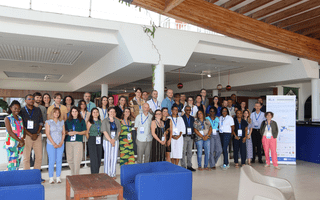
Second SystR consortium meeting in Guadeloupe
In December 2025, the SystR partnership met in Guadeloupe for its second consortium meeting.
Key Numbers
> 2.7 Million
Inhabitants
By 2040
the Galician public administration aims to achieve net zero emissions
2025
was the hottest summer on record
Covering nearly 30,000 km², the region is framed by the Atlantic Ocean and the Cantabrian Sea, giving it a distinctly maritime character. To the south, it borders Portugal, and to the east, it meets the regions of Asturias and Castile and León. This strategic location at Europe’s southwestern edge shapes Galicia’s climate, economy, and way of life.
The territory is marked by striking geographical contrasts. Coastal Galicia is defined by steep cliffs, long beaches, and intricate rías - deep estuaries that cut into the land and provide sheltered harbours and fertile valleys. Inland, the landscape goes from plains to rolling hills and mountain ranges, with the Ancares, Courel, and Xurés massifs that surpass 1,500 metres.
Galicia has an oceanic climate, which is temperate and humid, and influenced by Atlantic winds and a complex orography. Annual rainfall ranges from 600 to 2,000 millimetres, making it one of the rainiest regions in Spain, while average temperatures remain mild throughout the year. These conditions sustain lush vegetation, productive agriculture, and abundant rivers. The region’s natural diversity supports both coastal and inland ecosystems of exceptional ecological value.
Home to more than 2.7 million inhabitants, Galicia combines vibrant cities, in particular the coastal ones, with a largely rural interior. Yet, like many parts of Europe, it faces demographic challenges, including population ageing and rural depopulation. These trends highlight the need for strategies that balance economic development with environmental stewardship, ensuring that Galicia’s distinctive landscapes and communities remain resilient in the face of social and climatic change.
Flooding is among the most recurrent and damaging events. Some inland and coastal areas experience frequent floods, often intensified by high tides and storm surges. Towns along major rivers, urban expansions into former marshes, or modified river courses have further heightened flood risks, becoming particularly exposed areas.
Storms and cyclones also pose significant threats. Historical events such as Cyclones Hortensia (1984) and Klaus (2009) brought extreme winds, with some infrastructure damage, and forest destruction across large parts of Galicia. Strong Atlantic storms continue to affect both coastal and inland areas. These have disrupted power supply, transport, and sometimes communications, and it’s expected that this risk will continue to increase. Coastal villages are especially vulnerable to high waves, storm surges, and ongoing coastal erosion.
Heatwaves have become more frequent and intense, particularly over the last two decades. The summer of 2025 was likely the hottest on record, with temperatures in Ourense province exceeding 40 °C and posing health risks to the population. Galicia’s marine ecosystems are suffering due to acidification and a surface temperature increase, which affects the fishing, shellfish, and aquaculture production. Terrestrial ecosystems also show seasonal variations, new species introductions, or space competition, endangering their biodiversity. At the same time, wildfires have grown more severe and harder to control, with major outbreaks in the last decades causing widespread forest loss, infrastructure damage, and human casualties.
Overall, the combination of marine climate change effects, floods, storms, heat, and fire underscores Galicia’s growing vulnerability to climate change and the need for integrated resilience strategies across its land and coastal systems.
Building on lessons learned from Guadeloupe, the region will develop innovative strategies to address vulnerabilities along its Atlantic and Cantabrian coasts, where rising sea levels, storms, and marine and terrestrial heatwaves increasingly affect local communities and key economic activities.
Led by the Xunta de Galicia, and carried out through the DXERCC office, with technical support from the regional meteorological agency, the initiative will establish a local integrated resilience system (IERS), drawing on Galicia’s extensive environmental data infrastructure.
The activities in Galicia will build on and connect several ongoing initiatives, and all actions will align with Galicia’s Climate Change and Energy Strategy 2050, which envisions a sustainable model of resource use and low-carbon development. By combining scientific observation, strategic planning, and cross-sector collaboration, Galicia aims to serve as a model for coastal regions in Europe working to strengthen resilience against the growing impacts of climate change.

In December 2025, the SystR partnership met in Guadeloupe for its second consortium meeting.
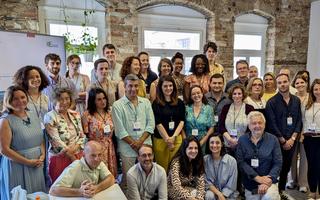
In June of 2025, the entire SystR partnership met for the first time to launch four years of work on systemic resilience.