Rome, Italy

The Italian capital addresses urban heat challenges affecting health, energy, tourism, and heritage through integrated planning.
Rome

Image from Pexels by Nika Benedictova

Key Numbers

2.7 Million

Inhabitants

2023/24

Hottest years ever recorded

43 km²

Urban green spaces

Covering 1,287 km² and home to around 2.7 million inhabitants (over 3 million including non-registered workers and residents), Rome combines a rich historical legacy with a dynamic urban environment shaped by modern challenges.

The city’s landscape features a mix of flat plains and rolling hills, crossed by the Tiber River, and enjoys a Mediterranean climate with hot summers and mild winters. Administratively, Rome is divided into 15 municipalities, each managing local development within the broader metropolitan framework.

Rome stands out as both a green and agricultural city: nearly two-thirds of its territory is made up of listed environmental areas that are often connected to historical and archaeological sites. About 43.9% of the land is used for agriculture, making Rome the largest agricultural municipality in Europe, while urban green spaces cover around 43 km². However, green areas are unevenly distributed, and inner-city neighbourhoods have limited access to them.

Rome’s economy is diverse, with key sectors including tourism, public administration, culture, and international affairs. Home to several UNESCO World Heritage Sites - including the Colosseum, the Pantheon, and Vatican City - it attracts millions of visitors each year. The city also serves as a hub for international organisations, embassies, and multinational companies.

Rising temperatures, prolonged droughts, and more frequent extreme weather events are transforming the city’s landscape and intensifying risks.

Among Italy’s regional capitals, Rome shows the most significant increase in average temperatures. Between 2011 and 2021, the city’s average annual temperature reached 17.7°C, which is about 1.7°C higher than the 1981-2010 average. The number of summer days (above 25°C) and tropical nights (above 20°C) continues to rise, while frost days are steadily declining. Heatwaves also pose serious health threats, particularly for elderly and vulnerable residents.

Rainfall patterns are also shifting, with the average annual precipitation falling from 807 mm (1971–2000) to 783 mm (2011–2021). At the same time, periods of drought are increasingly interrupted by intense downpours, with rain concentrated in fewer, heavier events that strain the city’s drainage systems. Flooding has become one of Rome’s most frequent hazards, often disrupting subway lines, regional trains, and major roads. The city also experiences days of strong winds, tornadoes, and storm surges along the coast. 

Today, nearly 400,000 residents live in areas exposed to hydrogeological risk, and around 9% of the population faces high vulnerability during prolonged heatwaves. These figures underscore the urgent need for integrated, city-wide adaptation strategies to enhance resilience and protect communities.

This district is part of the “compact city”, characterised by vibrant, densely inhabited neighbourhoods that offer a rich variety of cultural and recreational activities, yet face a shortage of green spaces. With 64% of its land already developed and only 8 m² of green area per inhabitant, the site reflects many of Rome’s urban challenges, making it a strategic location for exploring nature-based solutions that enhance urban resilience and liveability.

In Rome, the SystR project focuses on nature-based solutions (NBS) and urban blue infrastructure to strengthen climate resilience, address urban heat, and enhance liveability in vulnerable neighbourhoods.

The project implements measures such as urban lakes, rooftop ponds, and rainwater harvesting systems, strategically located in densely populated areas to reduce the Urban Heat Island effect and provide much-needed cooling. A particularly innovative action involves repurposing Rome’s iconic public fountains into an integrated system that collects and reuses water to irrigate new green spaces created by transforming paved areas and streets.

The project activities in Rome are led by the Centro Euro-Mediterraneo sui Cambiamenti Climatici (CMCC), providing scientific and technical support. Roma Capitale, as a public authority, will drive urban adaptation strategies and implement solutions, while A Sud leads local stakeholder engagement and supports the identification of suitable areas for future replication of the NBS solutions. As an associated partner, ACEA, the city’s water and electricity utility, will represent private sector interests - particularly in managing water resources and addressing cascading impacts on the energy system.

Rome’s flexible governance structures will enable the testing of public-private partnerships, the integration of urban and tourism risk management plans, and cross-sector collaboration, creating a replicable model for systemic urban climate resilience.

Connected Partners

Roma Logo
A Suf Logo
CMCC logo

Timeline

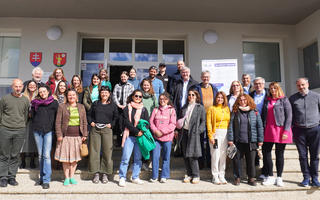
SystR partners in Ábelová (Slovakia)

In April 2026, partners from across Europe came together in the Slovak village of Ábelová for the third consortium meeting of the SystR project.

Read more

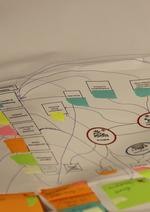
A photo of a poster being worked upon, making connections between different risks

#Guidelines, #Project Deliverable

The Regional Adaptation Board (RAB) Booklet is developed as a roadmap to establishing a Regional Adaptation Board  - and related Climate Innovation Hub (...

Read more

First workshop in Rome

In February 2026, local partners in Rome organised the first participatory workshop, bringing together local associations active in the Tor Pignattara neighbourhood and the wider V Municipio.

See more on LinkedIn