New SystR booklet supports regions in building collaborative climate adaptation
SystR has published a new Regional Adaptation Board Booklet, providing practical guidance for local and regional authorities, practitioners, and stakehol...

Key Numbers
383 000
People live on the islands
5
Municipalities make up the demonstration area
50m
of shoreline erosion in some parts of the islands



SystR has published a new Regional Adaptation Board Booklet, providing practical guidance for local and regional authorities, practitioners, and stakehol...
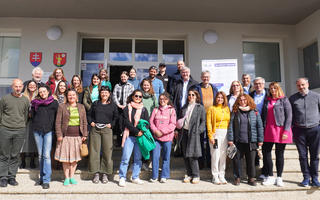
In April 2026, partners from across Europe came together in the Slovak village of Ábelová for the third consortium meeting of the SystR project.
#Guidelines, #Project Deliverable
The Regional Adaptation Board (RAB) Booklet is developed as a roadmap to establishing a Regional Adaptation Board - and related Climate Innovation Hub (...